



From Wind Damp Bi Syndrome to Modern Joint Comfort How Fangfeng Relates to Moving Pain Patterns
Fangfeng is the dried root of Saposhnikovia divaricata (Turcz.) Schischk., an Apiaceae medicinal plant known in English as Saposhnikovia root or siler. In traditional Chinese medicine, it is discussed in patterns where “wind” makes discomfort move, while dampness makes the body feel heavy and joints less comfortable. That language is not a diagnosis of rheumatoid arthritis or any other modern disease.
The useful bridge is narrower: Fangfeng gives practitioners a traditional way to describe a moving, variable pain pattern, and modern research is exploring anti inflammatory, analgesic and immune related actions of its constituents. Those laboratory findings do not prove that Fangfeng alone treats rheumatic disease. They do explain why the herb remains relevant to conversations about joint comfort, product quality and formula design.
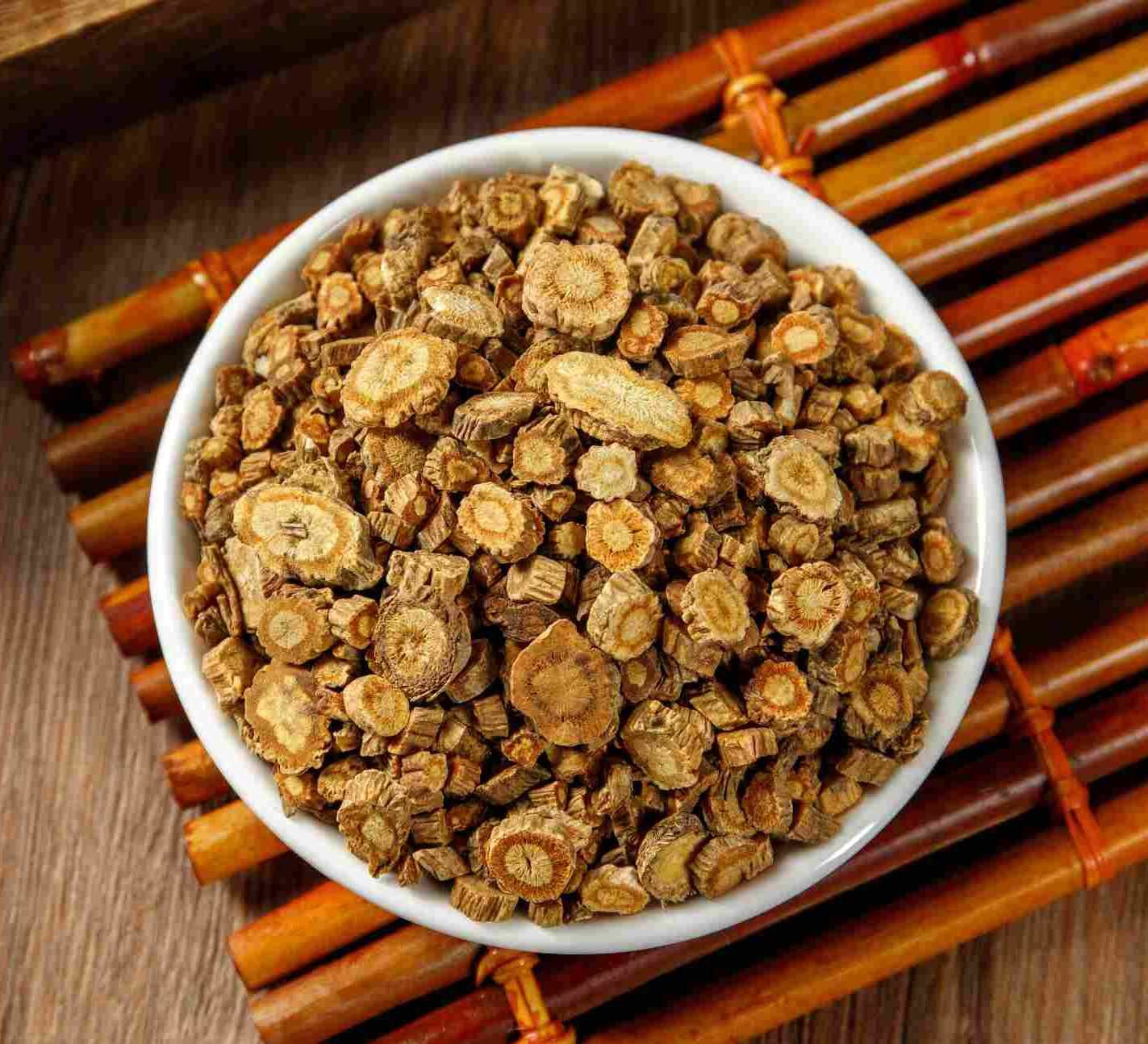
Quick answer How does Fangfeng fit wind damp Bi syndrome?
In TCM pattern language, Fangfeng is traditionally used to dispel wind, address dampness and ease pain, especially when discomfort shifts from place to place or comes with stiffness and a heavy sensation. Modern studies of Saposhnikovia divaricata investigate chromones, coumarins and inflammatory pathways, but clinical evidence is not strong enough to present Fangfeng as a stand alone treatment for rheumatic or moving pain.
What “wind” and “damp” mean in this context
Wind damp Bi syndrome is a traditional pattern label. “Wind” describes change: pain that wanders, flares in different joints or feels unusually mobile. “Damp” describes weight and obstruction: heaviness, swelling or stiffness that can feel worse in wet weather. The terms come from a diagnostic system with its own examination, tongue and pulse language.
That matters when a modern reader sees “rheumatic pain.” The phrase can refer to many conditions, from osteoarthritis to inflammatory arthritis, infection or an injury. A traditional pattern match cannot identify which one is present. A new hot, swollen joint, fever, sudden weakness or severe persistent pain needs medical assessment rather than a self directed herbal experiment.
Fangfeng identity and the material in commerce
The accepted botanical identity is Saposhnikovia divaricata (Turcz.) Schischk.; the medicinal material is usually its dried root, called Saposhnikoviae Radix or Fangfeng. Older records may use Ledebouriella divaricata or Siler divaricatum. Those are names to cross reference, not excuses to skip identity testing.
The plant belongs to Apiaceae. Roots are cleaned, cut and dried for decoction pieces or other preparations. The Chinese Pharmacopoeia describes basic quality features such as size, colour, texture and odour. Research on grade and origin also shows why “Fangfeng” alone is too short for an international specification: production areas, bolting and processing can affect the material.
For a buyer, the identity line should state the Latin name and author citation, plant part, form, origin, batch and agreed standard. The same wording should follow the lot across a label, invoice, packing list, specification and certificate of analysis.
What modern studies are actually examining
Chemical work on Fangfeng often focuses on chromones such as prim-O-glucosylcimifugin and 4′-O-beta-D-glucosyl-5-O-methylvisamminol, along with coumarins and polyacetylenes. These compounds are being studied for antioxidant, inflammatory and immune related effects in cell, animal or analytical models.
That is promising chemistry, not a clinical promise. A 2022 quality study used an HPLC fingerprint and chemometrics to compare material from different origins. The Chinese Pharmacopoeia 2020 quality discussion cited in that research sets a minimum combined amount for two chromone glycosides. A chromatographic number can help compare lots; it cannot tell a patient which herb or dose is appropriate.
Some reviews describe possible effects on inflammatory mediators, oxidative stress and pain signalling. The sensible wording is “research has investigated” or “may help explain traditional use.” Avoid “proven to relieve rheumatism,” “cures arthritis” or “replaces anti inflammatory medicine.” Those claims go beyond the evidence and create regulatory risk for a commercial page.
Why the pain pattern is described as moving
Imagine a client who reports a sore wrist on Monday, an ankle on Wednesday and a shoulder after a cold, wet day. The complaint changes location and intensity. A TCM practitioner may call that a wind dominated presentation, then ask whether there is heaviness, chill, heat, weakness or fixed tenderness.
The observation is clinically useful only inside that assessment system. It does not mean wind is a microorganism or that every migrating pain has the same cause. Modern rheumatic illness can also wax and wane, and some urgent conditions begin with pain that seems to move.
Fangfeng appears in formulas chosen for a pattern, often with herbs that address other features. The formula, preparation, dose and person matter. A single root in a tea is not equivalent to a classical prescription, an extract or a trial product.
How Fangfeng is positioned in traditional formula thinking
Traditional texts describe Fangfeng as a herb that can release the exterior, dispel wind, address dampness, ease pain and relieve spasms. In a wind damp Bi pattern, a practitioner may combine it with herbs selected for cold, heat, deficiency, blood stasis or stronger dampness signs.
That is why asking “Does Fangfeng relieve joint pain?” produces an incomplete answer. The better question is “Which pattern and preparation was intended, and what safety checks apply?” Formula logic is not a dosing instruction. Readers should not copy a prescription from a website, especially when they take anticoagulants, immunosuppressants, sedatives or medicines for chronic disease.
Practical quality checks for Fangfeng root
The checks below move from plant identity to chemistry and then to contaminant control, so each test answers a different buyer question.
Start with botanical authentication
Whole or cut root can be screened by macroscopic and microscopic features against an authenticated reference. Powder loses useful structure, so the identity plan should become more rigorous, not less.
Use chemical tests as part of a chain
TLC can compare characteristic bands. HPLC fingerprinting can compare a lot with a reference profile and help assess origin or grade. The method needs reference standards, system suitability and an acceptance range. A single marker is not a universal substitute for a specification.
Keep safety testing separate from identity
Identity testing answers “is this the stated plant?” It does not answer whether the lot meets limits for moisture, pesticides, heavy metals, microbes, sulphur dioxide or foreign matter. Those tests belong in the COA according to the destination market and intended use.
ISO 23964:2022 provides an international reference for quality and safety requirements for Saposhnikovia divaricata root and rhizome. Buyers should still confirm which edition, regulation and test laboratory their market requires.
Can Fangfeng be used for modern joint comfort products?
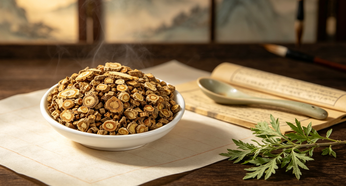
Product developers can use the traditional story as context, not as a disease claim. A tea, food or supplement brief might describe a warming botanical blend or a traditional wind damp pattern, then state the botanical identity and preparation. It should not promise relief from rheumatoid arthritis, gout or any named condition without an appropriate regulatory basis and clinical evidence.
For a pilot sample, record root cut, extraction ratio, time, temperature, final yield, taste and sediment. If an extract is later concentrated, repeat identity and contaminant testing on the finished material. “Natural” does not remove the need for dose control, contraindication review or market approval.
Questions importers should ask a Fangfeng supplier
- Is the material Saposhnikovia divaricata(Turcz.) Schischk., and are historical synonyms listed for searchability?
- Is the product dried whole root, cut root, powder or extract?
- What origin, harvest information, batch number and storage conditions are recorded?
- Which botanical identity method and chemical tests appear on the COA?
- Which Chinese Pharmacopoeia, ISO or customer specification is being followed?
- Are pesticide, heavy metal, microbial, moisture and sulphur dioxide limits agreed before shipment?
Huirui serves importers, wholesalers, distributors, manufacturers and brand owners seeking Chinese botanical raw materials. A useful inquiry includes the required form, quantity, destination, packaging, identity method and test list. The Fangfeng product inquiry should be matched to the documents for the offered lot; buyers should confirm any certificate or capability before publishing it.
Safety and responsible use
Fangfeng is not automatically safe because it is traditional. Allergies, interactions, contamination, incorrect species and concentrated extracts are real concerns. Pregnancy, breastfeeding, childhood use, liver or kidney disease and concurrent medicines all call for qualified advice. Stop a product and seek care for an allergic reaction, breathing difficulty, severe pain or a rapidly swollen joint.
The information here explains a traditional pattern and current research direction. It is not a diagnosis, prescription or substitute for professional medical care.
Conclusion
Fangfeng connects an old pattern language with a modern quality and research discussion. In TCM, Saposhnikovia divaricata root is associated with wind, dampness and pain patterns that may move. Modern studies examine its chromones, coumarins, fingerprints and possible inflammatory actions, but they do not justify a promise to cure rheumatic disease.
For responsible sourcing, begin with the species, root identity, origin and lot traceability. Add TLC or HPLC, contaminant limits and the standard required by the destination market. That combination gives buyers a clearer path from traditional story to a safe, supportable joint comfort product.
Working With Bozhou Huirui Chinese Medicine Technology Co., Ltd.
The Bozhou Huirui Chinese Medicine Technology Co., Ltd. is a reliable supplier of ancient Chinese medicine. The company was founded in 2010. The firm sources raw materials directly from regions like Anhui province. Their expertise includes logistics of products such as powders and herbal tonics. Quality control procedures comply with international standards to ensure purity of the product. Find out more about the firm on our about us page.
Frequently asked questions
What is Fangfeng called in English?
Fangfeng is commonly translated as Saposhnikovia root or siler. The botanical name for the medicinal root is Saposhnikovia divaricata (Turcz.) Schischk. Older documents may use Ledebouriella divaricata or Siler divaricatum, so a specification can list those as cross references.
Does Fangfeng treat rheumatic arthritis?
No reliable conclusion supports presenting Fangfeng alone as a treatment for rheumatoid arthritis or another diagnosed rheumatic disease. Traditional use discusses patterns such as wind damp Bi syndrome, while modern studies are still mainly pharmacological, analytical or formula based.
Why is moving pain linked with wind in TCM?
“Wind” is a traditional description for symptoms that change or move, such as discomfort that shifts between joints. It is not a modern pathology term and should not be used to rule out injury, infection or inflammatory disease.
What compounds are used to evaluate Fangfeng quality?
Quality studies often examine chromone glycosides, including prim-O-glucosylcimifugin and 4′-O-beta-D-glucosyl-5-O-methylvisamminol. HPLC fingerprints and TLC can support comparison, but the full test plan should follow the agreed standard.
Is Fangfeng suitable for a joint comfort tea?
That depends on local food rules, the formula, dose, intended users and test documents. A product team should review regulatory status and safety with qualified professionals. Traditional language can provide context but should not become an unapproved disease claim.


