



Hedyotis, Oldenlandia, or Scleromitrion: Which Name Is Right?
A buyer opens two files for the same dried herb. One says Hedyotis diffusa. The other says Scleromitrion diffusum. Then an older paper calls it Oldenlandia diffusa. It looks as if three plants have been mixed together.
They haven’t. In the phrase Hedyotis diffusa vs Oldenlandia diffusa vs Scleromitrion diffusum, the names belong to one species under different taxonomic treatments. The awkward part is paperwork: databases, journal articles, pharmacopoeias and product labels don’t all change names at the same speed.
Are Hedyotis diffusa and Oldenlandia diffusa the same? Yes. But that answer doesn’t extend to every similar name. Hedyotis corymbosa, for example, is a different species. That one-word difference is easy to miss on an invoice and expensive to discover after a batch has been milled.
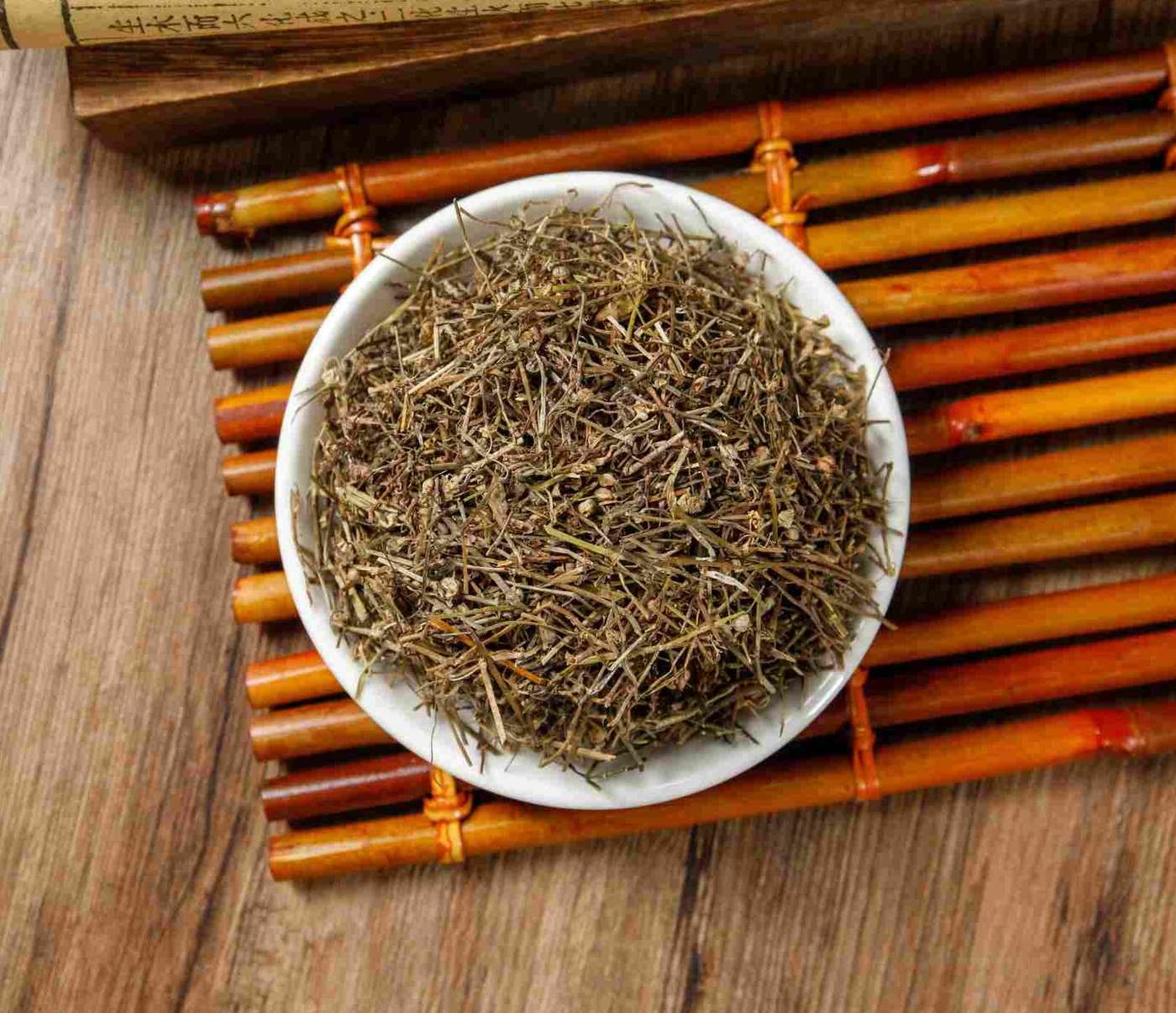
The short answer
Yes. Hedyotis diffusa Willd., Oldenlandia diffusa (Willd.) Roxb. and Scleromitrion diffusum (Willd.) R.J.Wang are names applied to the same species. Kew’s Plants of the World Online currently accepts Scleromitrion diffusum and records the other two as homotypic synonyms. None of the three is interchangeable with Hedyotis corymbosa or Hedyotis tenelliflora.
So, is Scleromitrion diffusum the same as Hedyotis diffusa? Yes, for the plant discussed here. A taxonomic synonym is another scientific name attached to the same taxon; it isn’t a typo or automatically a defective label. The authority and access date still belong in a technical file because database treatments can change.
Three names, one species
|
Name |
What happened |
Where it still turns up |
What a buyer should do |
|
Hedyotis diffusa Willd. |
Original name published in 1798 |
Research, legacy standards, current trade pages |
Keep it as a searchable Hedyotis diffusa synonym |
|
Oldenlandia diffusa (Willd.) Roxb. |
The species was recombined in Oldenlandia in 1814 |
Older botany, herb trade and ingredient records |
Cross-reference it as an Oldenlandia diffusa synonym |
|
Scleromitrion diffusum (Willd.) R.J.Wang |
Modern placement published in 2014 |
Current plant databases and newer studies |
Use it where the named authority requires the accepted name |
Queries for “Scleromitrion diffusum synonyms,” “Hedyotis diffusa scientific name” and “Oldenlandia diffusa scientific name” can land on quite different pages. That doesn’t create three commodities. It does explain why a sensible specification carries the accepted name and synonyms together.
There is a small but important limit to that convenience. A synonym resolves a naming history; it doesn’t authenticate the material in the bag. The sample still has to match the stated species.
Why did the botanical name move?
Botanical nomenclature keeps a record of how names were published. Taxonomy deals with how botanists understand relationships among plants. The two overlap, which is why a genus can change while the species itself hasn’t suddenly become something new.
1798: *Hedyotis diffusa* Willd.
Willdenow published the name Hedyotis diffusa Willd. in 1798. It has had more than two centuries to settle into books, papers and trade vocabulary. That long use is why Hedyotis diffusa taxonomy searches remain useful even when a newer database heading starts with Scleromitrion.
1814: *Oldenlandia diffusa* (Willd.) Roxb.
Roxburgh placed the species in Oldenlandia in 1814. The epithet diffusa stayed. Willdenow’s name moved into parentheses and Roxburgh’s followed it, producing Oldenlandia diffusa (Willd.) Roxb. That author line is a compact history, not decorative Latin.
This point clears up much of the Oldenlandia diffusa taxonomy confusion. The 1814 combination didn’t introduce a second medicinal raw material.
2014 onward: *Scleromitrion diffusum* (Willd.) R.J.Wang
R.J. Wang published the combination in Scleromitrion in 2014 as botanists reconsidered the boundaries of these genera using morphological and molecular evidence. Later work dealt with the type connected to the older name. The details matter to taxonomists, but a purchasing team needs a simpler operational rule: name the authority you follow and preserve the familiar synonyms in the same record.
What is the accepted botanical name today?
As checked on 10 September 2026, Kew Science’s Plants of the World Online marks Scleromitrion diffusum (Willd.) R.J.Wang as accepted. Its record includes Hedyotis diffusa Willd. and Oldenlandia diffusa (Willd.) Roxb. among the homotypic synonyms.
That is the direct answer to “accepted botanical name for Hedyotis diffusa.” It is not a command to erase every older name. The Chinese Pharmacopoeia, importing documents, journal indexes and company systems may follow different revision cycles. An old combination can remain the right search term and the required wording in a particular standard.
A first mention such as “Scleromitrion diffusum (syn. Hedyotis diffusa; Oldenlandia diffusa)” lets a reader connect current and historical usage without guessing. Add the database and date in the supporting file.
Where does Bai Hua She She Cao fit?
The Bai Hua She She Cao scientific name looks inconsistent only when its naming history is hidden. Baihuasheshecao refers to the Chinese materia medica commonly connected with this Rubiaceae medicinal plant. English catalogues may use white flower snake tongue grass or spreading hedyotis.
Those common names help people find a product; they don’t prove identity. “Oldenlandia herb” is looser still. A purchase order for a whole dried herb should give a botanical name and author citation, family, plant part, origin and processing form. Huirui’s plant medicine page currently uses Hedyotis diffusa Willd., a familiar trade name that can be cross-referenced to the accepted record.
The near-match that isn’t a synonym
Now to the part most likely to cause a real batch problem. Hedyotis corymbosa and Hedyotis tenelliflora have appeared as confusing materials in authentication research. They are not extra entries in the Hedyotis diffusa synonym list.
Hedyotis diffusa vs Hedyotis corymbosa
They are different species. Dried, fragmented material can make that distinction less obvious than a clean botanical illustration suggests. A 2024 study of ten market samples of Scleromitrion diffusum and ten of Oldenlandia corymbosa compared morphology, microscopy, TLC and HPLC. The researchers reported differences that could help separate the two.
The phrase Oldenlandia diffusa vs Oldenlandia corymbosa leads to the same answer. A shared genus name doesn’t make the species interchangeable. Oldenlandia corymbosa is a name used for the plant also called Hedyotis corymbosa; it does not join the three-name chain discussed above.
A quick document check
|
Name shown |
Same species as Bai Hua She She Cao in this guide? |
Next check |
|
Scleromitrion diffusum |
Yes |
Confirm author, part and cited standard |
|
Hedyotis diffusa |
Yes, as a synonym |
Link it to the accepted record |
|
Oldenlandia diffusa |
Yes, as a synonym |
Retain both forms in the specification |
|
Hedyotis corymbosa / Oldenlandia corymbosa |
No |
Ask for separate botanical identity evidence |
|
Hedyotis tenelliflora |
No |
Treat it as a confusable species |
Scleromitrion diffusum vs Oldenlandia corymbosa is therefore an identity question, not a style preference. When medicinal herb adulteration is possible, a plausible common name is a weak control. Research on common adulterants of Hedyotis diffusa is useful precisely because milling removes many of the features visible in an intact plant.
How can the material be authenticated?
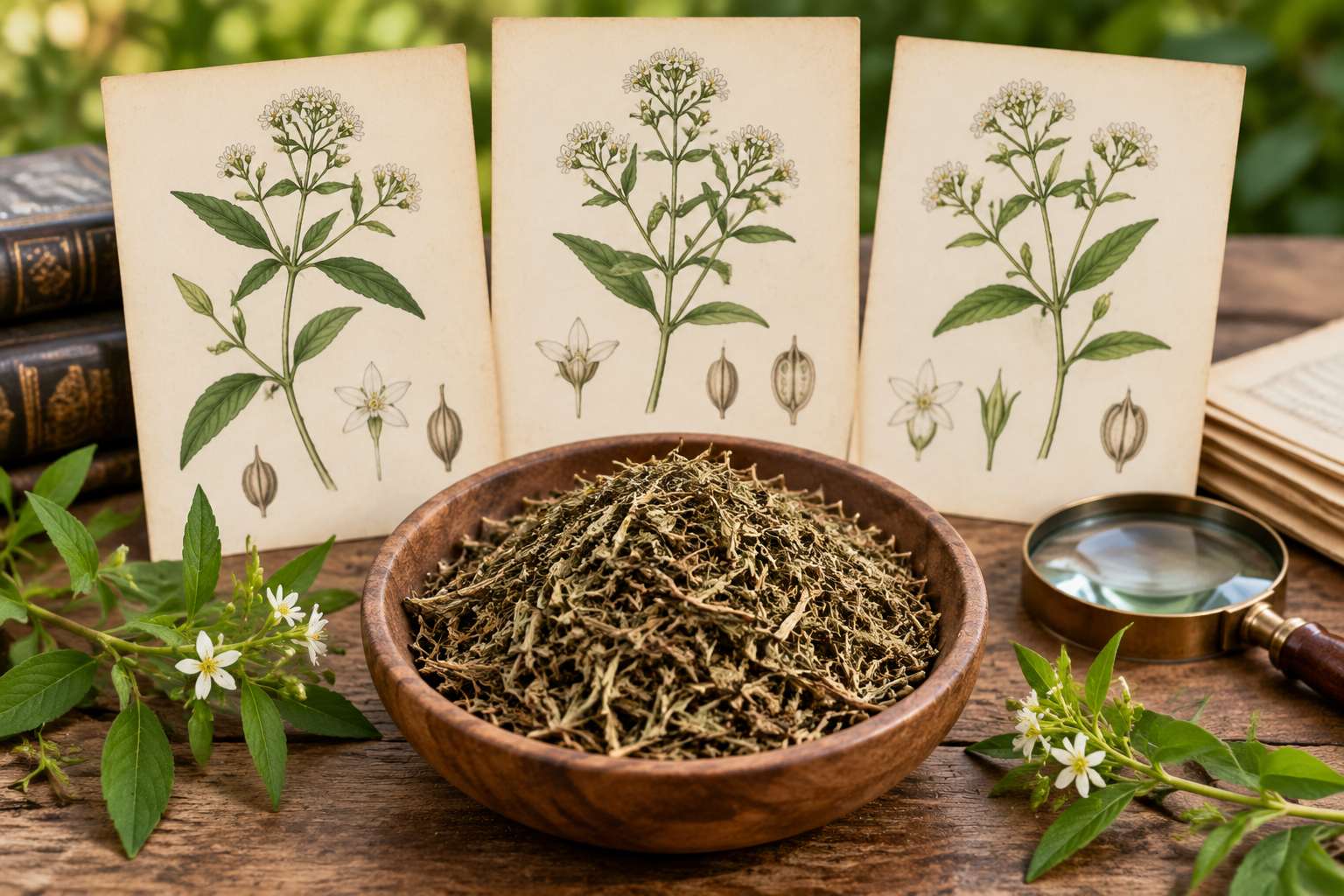
Oldenlandia herb identification usually starts before a laboratory instrument is switched on. Who supplied the batch? Is its origin recorded? Was an authenticated reference material used? Are the leaves, stems, flowers or fruits intact enough for examination?
Macroscopic and microscopic work can screen whole or coarsely cut material. Scleromitrion diffusum identification becomes more difficult as the pieces get smaller, and powder offers fewer visible clues. This is where a layered plan earns its keep.
TLC and HPLC answer different questions
TLC identification can compare the sample pattern with reference herb or reference compounds. An HPLC fingerprint gives a more detailed chemical profile and may expose differences that the eye misses. Neither acronym is a magic stamp; the method, reference and acceptance criteria have to be named.
Two recent studies illustrate why details matter. The 2024 comparison used asperuloside and scandoside methyl ester while studying S. diffusum and O. corymbosa. A separate 2025 paper examined 58 commercial or freshly collected samples of S. diffusum and confusing species. It proposed (E)-6-O-(p-coumaroyl) scandoside methyl ester as a more specific chemical marker.
“Proposed” is the key word. That paper supplies useful evidence for Hedyotis diffusa authentication, but it doesn’t prove that every edition of every pharmacopoeia has adopted the marker.
DNA methods have a place, too
DNA barcoding can support herbal authentication when morphology is limited, provided usable DNA remains and the selected markers and reference data can resolve the species. Processed material, mixed powder and poor extraction can complicate the result. A molecular answer is strongest when it agrees with traceability, reference material and an appropriate chemical or microscopic check.
One test may be enough under a specific agreed standard. In higher-risk cases, the evidence chain matters more than collecting fashionable methods.
What belongs on a specification and COA?
A Chinese herbal raw material file should let someone trace the identity from inquiry through receipt. Buyers searching for bulk Hedyotis diffusa, bulk Oldenlandia diffusa or a Scleromitrion diffusum supplier can ask for the same core fields:
- The name adopted for the transaction, with full author citation.
- Recognized synonyms, Rubiaceae family and plant part.
- Origin, batch number, processing form and relevant production notes.
- Botanical identity testing method, test method and acceptance criteria.
- The edition of the Chinese Pharmacopoeia or another agreed standard.
- Consistent wording on the label, invoice, packing list, certificate of analysis and botanical specification sheet.
A practical identity line might read: “Botanical identity: Scleromitrion diffusum (Willd.) R.J.Wang; also referenced as Hedyotis diffusa Willd. and Oldenlandia diffusa (Willd.) Roxb.; family Rubiaceae; dried whole herb.” The contract and destination-market requirements decide the final wording.
One more check is worth doing before approval: search every PDF, spreadsheet and artwork file for “corymbosa.” It takes a minute. If the word appears, stop and find out whether it describes a comparison, a test sample or the ordered material.
A note for importers
A supplier inquiry works better when it includes the name required on the destination label, product form, target cut, proposed use, testing plan and applicable standard. If the order is powder, ask how the incoming plant was identified before milling and how the lot link is retained.
Bozhou Huirui Chinese Medicine Technology Co., Ltd. supplies dried botanical materials to importers, wholesalers, distributors, manufacturers and brand owners. For a bulk inquiry, buyers can send their identity, form, test, document and destination requirements through the contact page. Claims about a particular certificate or test should be confirmed against the documents for the offered batch.
Conclusion
Hedyotis diffusa, Oldenlandia diffusa and Scleromitrion diffusum are three combinations in the history of one species. Kew currently accepts Scleromitrion diffusum, while the older two remain common and useful in research, standards and trade.
The risky names are the near-matches: Hedyotis corymbosa, Oldenlandia corymbosa and Hedyotis tenelliflora. Keep them outside the synonym chain. Then tie the chosen botanical name to its author, family, plant part, standard version and identity method. That is far safer than asking one name to carry the whole specification.
Frequently asked questions
Is Hedyotis diffusa the same as Oldenlandia diffusa?
Yes. Hedyotis diffusa Willd. and Oldenlandia diffusa (Willd.) Roxb. are taxonomic combinations for the same species. The second name records a change of genus, not a second herb.
Is Scleromitrion diffusum the accepted name for Hedyotis diffusa?
Plants of the World Online accepted Scleromitrion diffusum (Willd.) R.J.Wang when checked on 10 September 2026 and listed Hedyotis diffusa as a synonym. A pharmacopoeia or legacy specification may still use an older name, so record the authority and version.
Is Hedyotis corymbosa the same as Hedyotis diffusa?
No. The Hedyotis diffusa vs Hedyotis corymbosa comparison concerns two species. Similarity in dried material has made authentication a practical issue, especially after cutting or powdering.
Why do papers still use Oldenlandia diffusa?
Older papers were indexed under that combination, and some fields retain familiar terminology long after a taxonomic revision. Searching the historical name often finds evidence that a current-name-only search misses.
Which botanical name should appear on a COA?
Use the name required by the agreed specification and destination rules. Where the format allows, pair the accepted name with familiar synonyms, family and plant part so newer taxonomy connects cleanly with older records.
Can powdered Bai Hua She She Cao be identified by appearance alone?
Not reliably. Powder has lost many macroscopic characters. Traceability and a suitable laboratory identity method become more important, and the method should match the stated standard and product form.


