



Freeze-Dried Pitaya for Modern Food Production
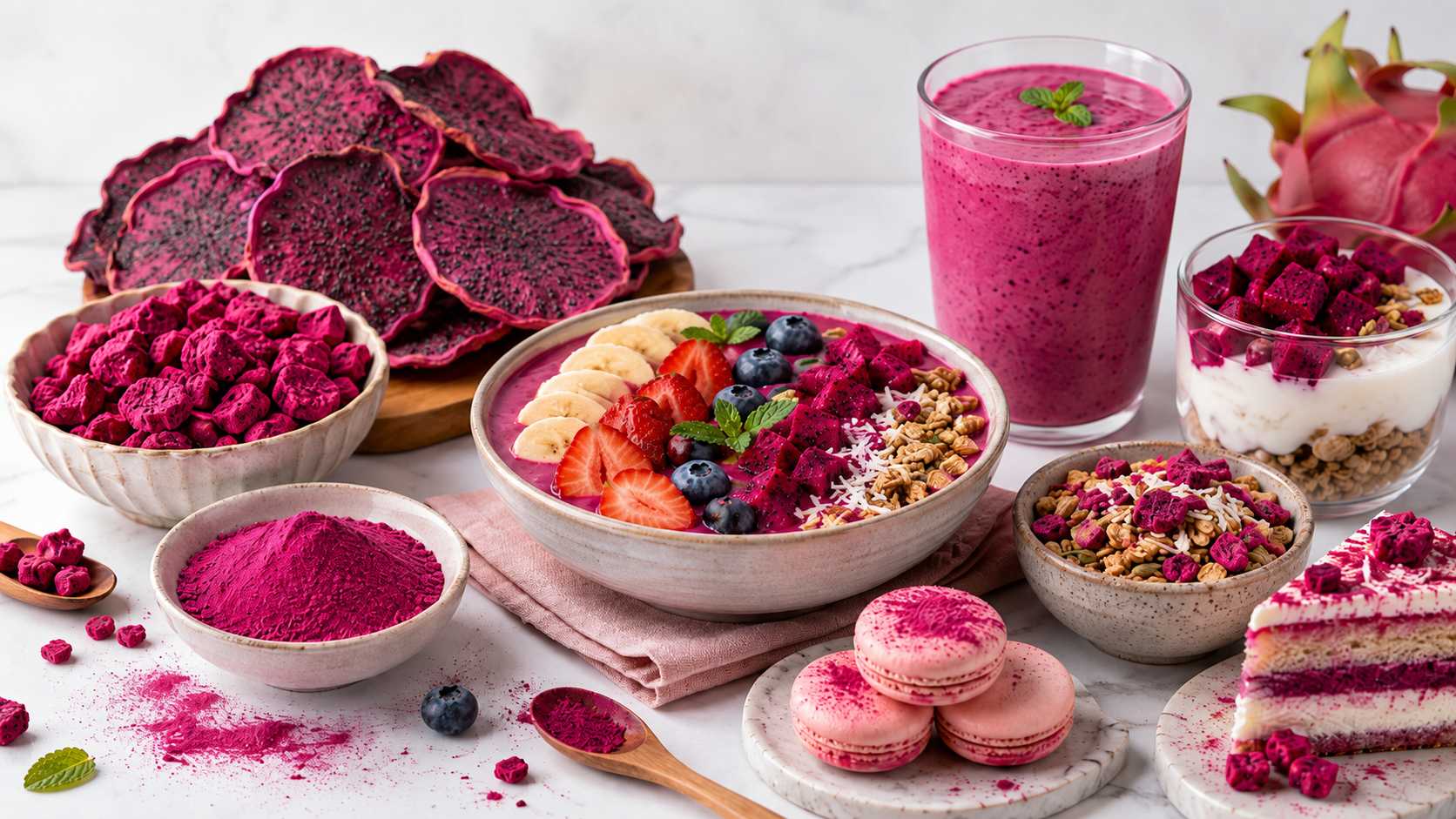
Freeze-dried pitaya once lived mostly in fancy smoothie bowls. Now it shows up in regular food development work. The bright color, soft taste, dry form, and easy handling make it fit drinks, baked goods, cereals, snacks, and nutrition mixes. For makers the real help is simple. Freeze-dried dragon fruit brings clear fruit content. It skips the heavy water, short life, and seasonal swings that come with fresh pulp.
The ingredient comes in a few shapes. Pieces give crunch and a clear look. Granules work as mix-ins and toppings. Freeze-dried pitaya powder spreads through dry blends. It can also give a formula an even pink-to-magenta tone. The best shape depends on the process, the texture you want, the package, and how long the color needs to stay bright.
What Is Freeze-Dried Pitaya?
Freeze-dried pitaya starts with prepared dragon fruit. The fruit gets frozen first. Then the ice leaves under vacuum. The ice does not turn into water. It changes straight into vapor. What remains is a light and open structure with almost no moisture left.
This gentle process protects the fruit. Strong heat can hurt aroma, color, and shape. Red-fleshed pitaya stands out for its betacyanin pigments. White-fleshed kinds look lighter and taste milder. The finished goods can arrive as uneven pieces, slices, granules, or powder.
| Format | Main role | Suitable applications |
|---|---|---|
| Pieces or slices | Visible fruit and crisp texture | Snacks, cereal, granola, yogurt, desserts |
| Granules | Evenly sized inclusions | Bars, chocolate, bakery fillings, toppings |
| Powder | Fast dosing and broad color distribution | Smoothies, drink mixes, frosting, dough |
Why Food Developers Use Freeze-Dried Dragon Fruit
This ingredient can fix several formula problems at once. It brings fruit character, color, and texture. At the same time it stays easy to weigh and store. Still, how well it works depends on the whole recipe.
Fruit Solids Without Added Liquid
Fresh pitaya pulp holds a lot of water. In cake batter, frosting, chocolate filling, or powdered drinks that water can change thickness, sweetness, drying time, and stability. Freeze-dried dragon fruit powder gives fruit solids. It does this with much less effect on the water balance.
This helps a lot in buttercream. Fresh purée can soften the structure. A dry powder mixes into the fat-and-sugar part with better control. In cookies and snack bars granules create visible fruit bits. They do this without making the dough wet.
Natural Color for Clean-Label Products
Red pitaya naturally adds pink or magenta tones. In some recipes freeze-dried pitaya powder can supply both fruit content and color. That cuts the need for a separate coloring agent.
Color does not stay fixed. Heat, pH, oxygen, light, moisture, and storage time can all shift the shade. A good trial checks the product right after processing. It also checks the product again during its planned shelf life.
Easier Year-Round Planning
Fresh dragon fruit spoils quickly. It can also change by harvest, shipping path, and ripeness. A well-packed freeze-dried ingredient is simpler to keep as production stock. Teams can use it all year.
Freeze-dried fruit pulls moisture from the air. That can reduce crispness or cause clumping. High-barrier packaging, dry storage, and quick resealing matter a lot after the pack opens.
Food Applications for Freeze-Dried Pitaya
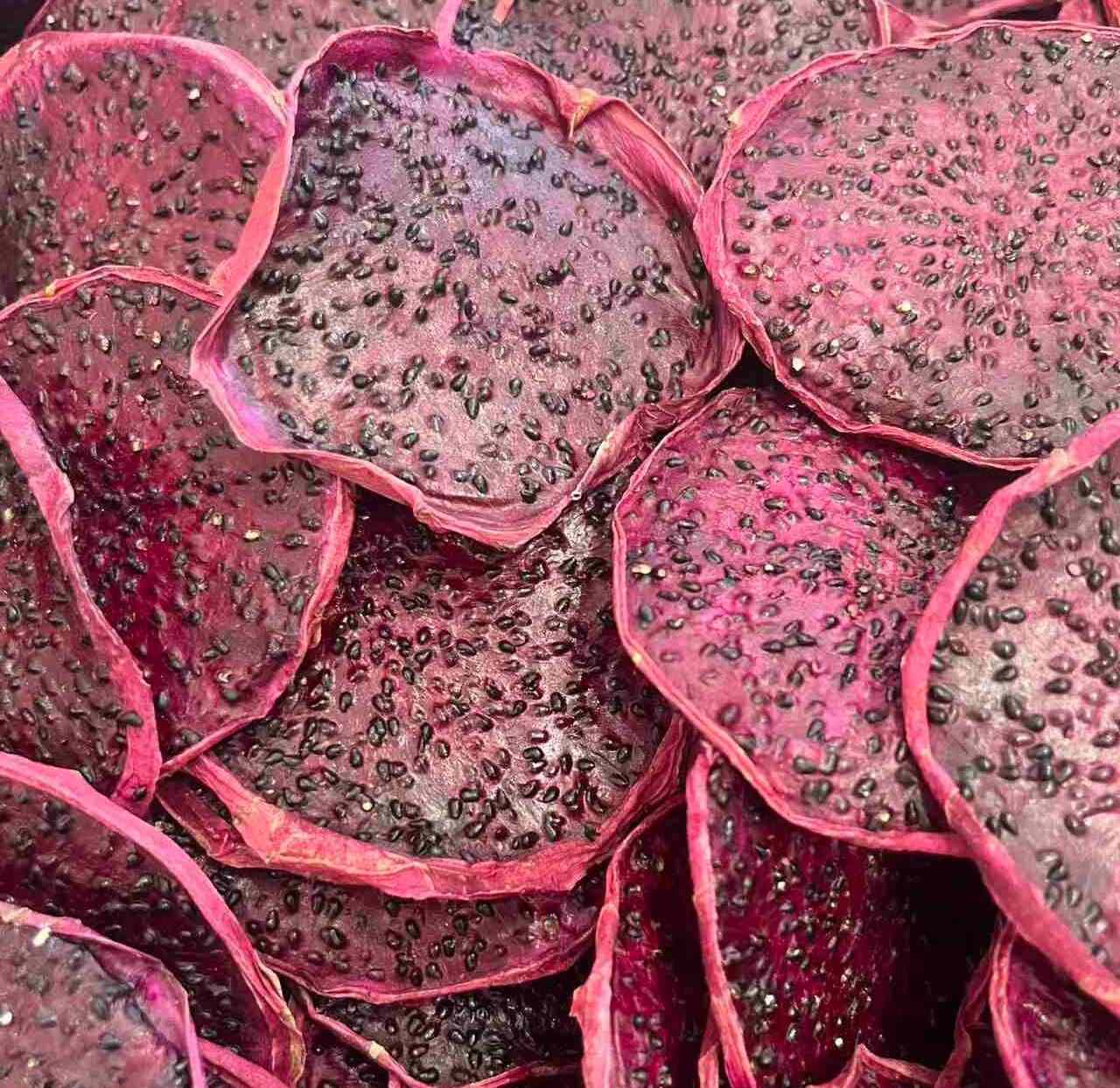
The strongest uses are the ones where a dry fruit ingredient gives a clear technical edge. Product teams should match the format to the process step. Pieces and powder are not always the same thing.
Smoothies, Drink Powders, and Plant-Based Beverages
Freeze-dried pitaya powder fits smoothie mixes, meal-replacement powders, protein blends, and instant fruit drinks. Pre-blending it with other dry goods often gives more even color. Adding it only at the final mix stage usually works less well.
Trials should check these points:
-
Dispersibility in cold and warm liquids
-
Sediment after standing
-
Flavor balance with acids and sweeteners
-
Color change under light and heat
-
Powder flow after opening
Pitaya has a mild taste. It can sit next to stronger fruit notes such as citrus, berry, or mango. Its main gift may be color and fruit solids. It does not always need to be the main flavor.
Bakery Products, Frostings, and Confectionery
Fruits that are freeze-dried are useful in baking because using fresh fruits would increase the level of moisture. Powder can be added to cake mixes, cookie mixes, icing, and frosting. Granules can be blended with chocolate and cereal bars.
Heat needs care. Red pitaya pigments react to process conditions. A bright raw batter may soften in color after baking. For stronger visual impact the powder often works better in a post-bake glaze, cream layer, coating, or filling.
The dry form also gives bakers more control over dough and batter consistency. Fresh fruit can release juice during mixing or baking. That creates wet pockets and uneven texture. Freeze-dried pitaya pieces deliver visible fruit character. They add far less free water.
In chocolate and fat-based coatings the ingredient must stay protected from humid air. Moisture pickup can cause clumping before mixing. It may also interfere with an otherwise smooth coating process.
Breakfast Foods and Dessert Toppings
Pieces and granules suit granola, cereal clusters, yogurt toppers, ice cream, and dessert garnish blends. Their open structure gives an instant crunch. The strong color stays visible among oats, nuts, or pale dairy bases.
Texture shifts quickly after contact with moisture. In a yogurt cup a separate topper compartment can guard crispness. In ice cream the addition point should match the goal. That goal may be a crisp inclusion or a softer bite.
Freeze-dried pitaya pieces can also be crushed into different sizes for layered desserts. Fine crumbs add surface color. Medium granules create texture. Larger pieces act as a clear fruit garnish.
Snacks and Functional Food Products
Pitaya freeze-dried pieces can be used in trail mixes and fruit snacks. For powders and granulated forms, applications will include nutrition bars, fruit chews, powdered dietary supplements, and vegetarian snacks.
In trail mix, whole pieces will add variation when combined with nuts, seeds, coconut, or other dried fruits. In a nutrition bar smaller granules spread more evenly. They also lower the chance that large pieces break during cutting or packing.
Commercial buyers should focus on measurable specs. Moisture, microbiological limits, composition, particle size, and packaging all affect production performance. Any nutrition or health claim must rest on the finished product, serving size, test data, and local rules.
How to Choose a Freeze-Dried Pitaya Ingredient
Selection should start with the end product. A visually driven cereal needs intact pieces. A beverage plant needs powder that doses steadily and behaves in a predictable way in water. A bakery may use powder for color and granules for visible fruit identity.
Important supplier questions include:
-
Is the material made from red-fleshed or white-fleshed pitaya?
-
Does it contain carriers, sugar, or other additives?
-
What are the moisture, microbiological, and particle-size specifications?
-
Which packaging protects it from humidity and oxygen?
-
Are samples, custom cutting, grinding, or private-label services available?
Color should be judged under the real production conditions. A powder that looks deep magenta in its original bag may give a lighter shade after dilution, heating, or mixing with dairy proteins, cocoa, flour, or acidic ingredients.
Particle size also changes performance. Fine powder spreads color fast but may create dust during handling. Larger granules are easier to see in the finished food. Yet they may settle in thin liquids. Pieces give the clearest fruit identity. They need more protection from crushing during transport.
Pilot production should use the mixing sequence, temperature, holding time, and package planned for commercial scale. A tabletop sample can act differently after baking, filling, transport, or storage.
Packaging and Storage Considerations
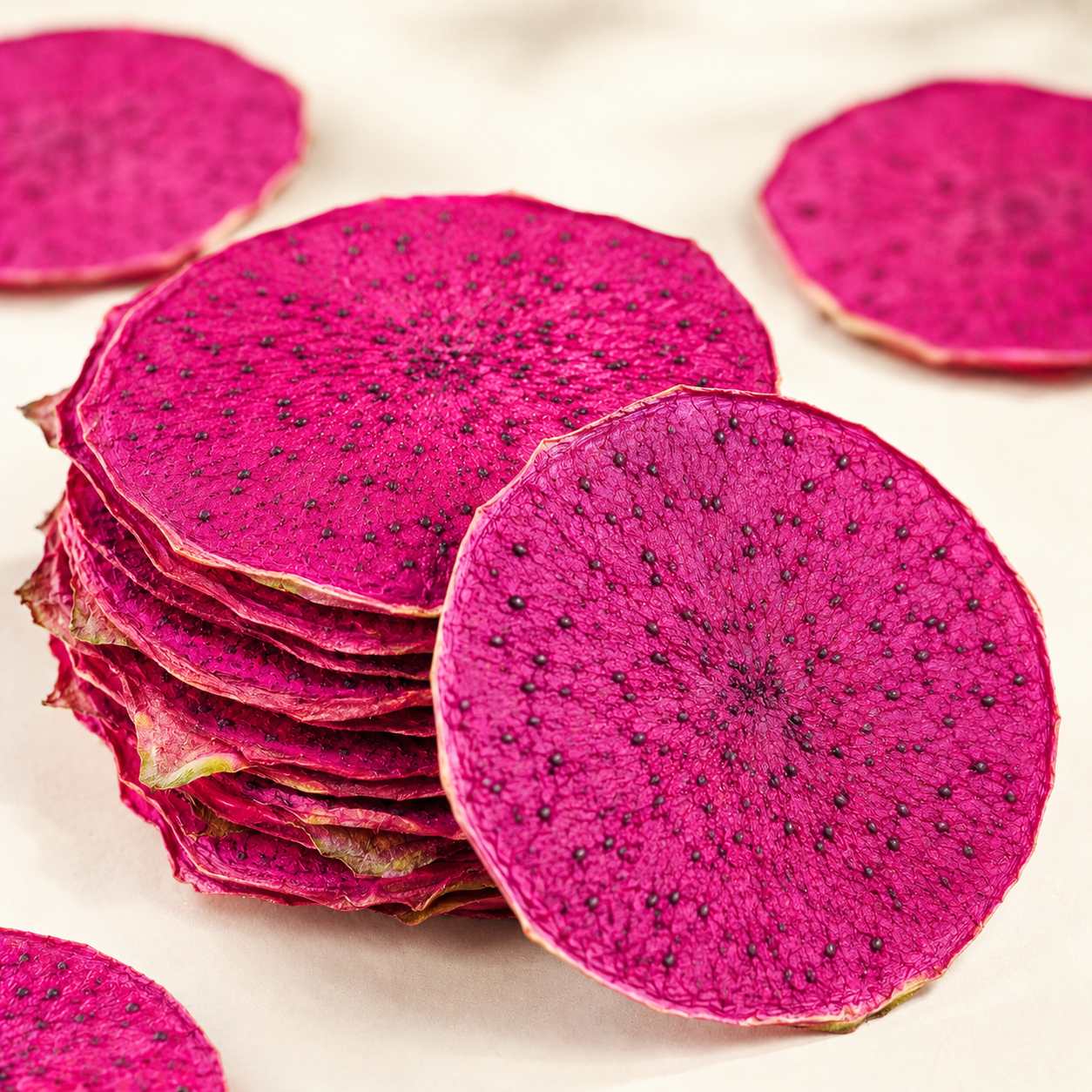
Ingredients containing freeze-dried fruit become stable only as long as moisture is controlled. As soon as an opened bag is exposed to the air in a moist environment, the product may get a soggy consistency. Lumping may occur.
The package for sale must provide reliable protection against humidity, oxidation, and light. Food-grade inner lining, tight-sealed outer packaging, and reasonable pack sizes may help avoid frequent openings of the pack.
Production teams should also avoid placing opened Freeze-Dried Pitaya near steam, wash areas, or warm equipment that creates condensation. A smaller working quantity can move to the line. The rest stays sealed.
Storage instructions and shelf life should come from the supplier’s specification and supporting stability data. A long shelf life should not be assumed just because the ingredient feels dry.
Bozhou Huirui as a Freeze-Dried Pitaya Supplier
Bozhou Huirui Chinese Medicine Technology Co., Ltd. is located in Bozhou, Anhui. This region is known to be an important center for the business of trading of Chinese medicine material and botanicals. The range of products it trades includes Chinese medicine herbs, plant material, spices, dried botanicals and freeze-dried fruits such as Freeze-Dried Pitaya.
This company makes use of its network of directly sourced materials. The company serves wholesalers, importers, distributors, food companies and brands. The process of production includes the process of selection of raw materials, quoting, manufacturing, quality control, packing and delivery of orders. Private labeling is also available as per requirements.
This mix of botanical sourcing and processing support fits buyers who purchase more than one natural ingredient. Freeze-dried dragon fruit and other plant materials can move through one supply process. Quality documents, packaging, and shipping requirements can be aligned before production starts.
For buyers building a new food product talks can begin with the needed pitaya form, particle size, expected order volume, destination market, packaging, and application. A representative sample can then be tested in the actual recipe before any commercial purchase.
Conclusion
Freeze-Dried Pitaya holds clear roles in modern food production. Powder form is appropriate for beverages, frosting, dough, and dry nutrition mixes. Granules and pieces give texture and fruit bits in cereals, snacks, chocolates, yogurt toppings, and dessert mixes.
Key advantages include minimal moisture, bright natural color, year-round processing, and multiple forms. However, success requires conducting proper tests. High temperature, light exposure, oxygen, moisture, acid content, and packaging may influence final product. Companies that define desired texture, color, and shelf-life before choosing a type have better chances to achieve consistent results.
FAQs About Freeze-Dried Pitaya
What is Freeze-Dried Pitaya used for?
Used in smoothies, drinks, bakery goods, frosting, cereals, granola, yogurt toppings, snacks, chocolate, nutrition bars, and dessert decorations. Powder mixes easily. Granules are great for adding texture.
Can freeze-dried pitaya powder substitute for artificial colors?
Sure. It can provide natural color in shades of pink and magenta. But not all formulas can be substituted. Colors can vary in shade and stability due to pH, temperature, lighting, oxidation, moisture, and concentration. Shelf-life studies must be done.
Can freeze-dried pitaya be used for baking?
Yes. Powder and granules are suitable for use in cakes, cookies, fillings, frostings, and coatings. Natural colors can fade under high temperatures. So glaze or cream filling will yield a more saturated color.
How to store Freeze-Dried Pitaya?
It should be stored in closed airtight containers in a dry, cool, dark place. Re-seal the container tightly upon opening. The freeze-dried fruit can absorb moisture from the air.
What should the buyer ensure before ordering wholesale freeze-dried pitaya?
Look into fruit variety, fruit composition, water content, microbial restrictions, particle size, coloration, packaging, sampling availability, and possibilities for customization. Specifications must correspond to food processing procedures.


