



Cuttlefish Bone: From Marine Byproduct to TCM Raw Material
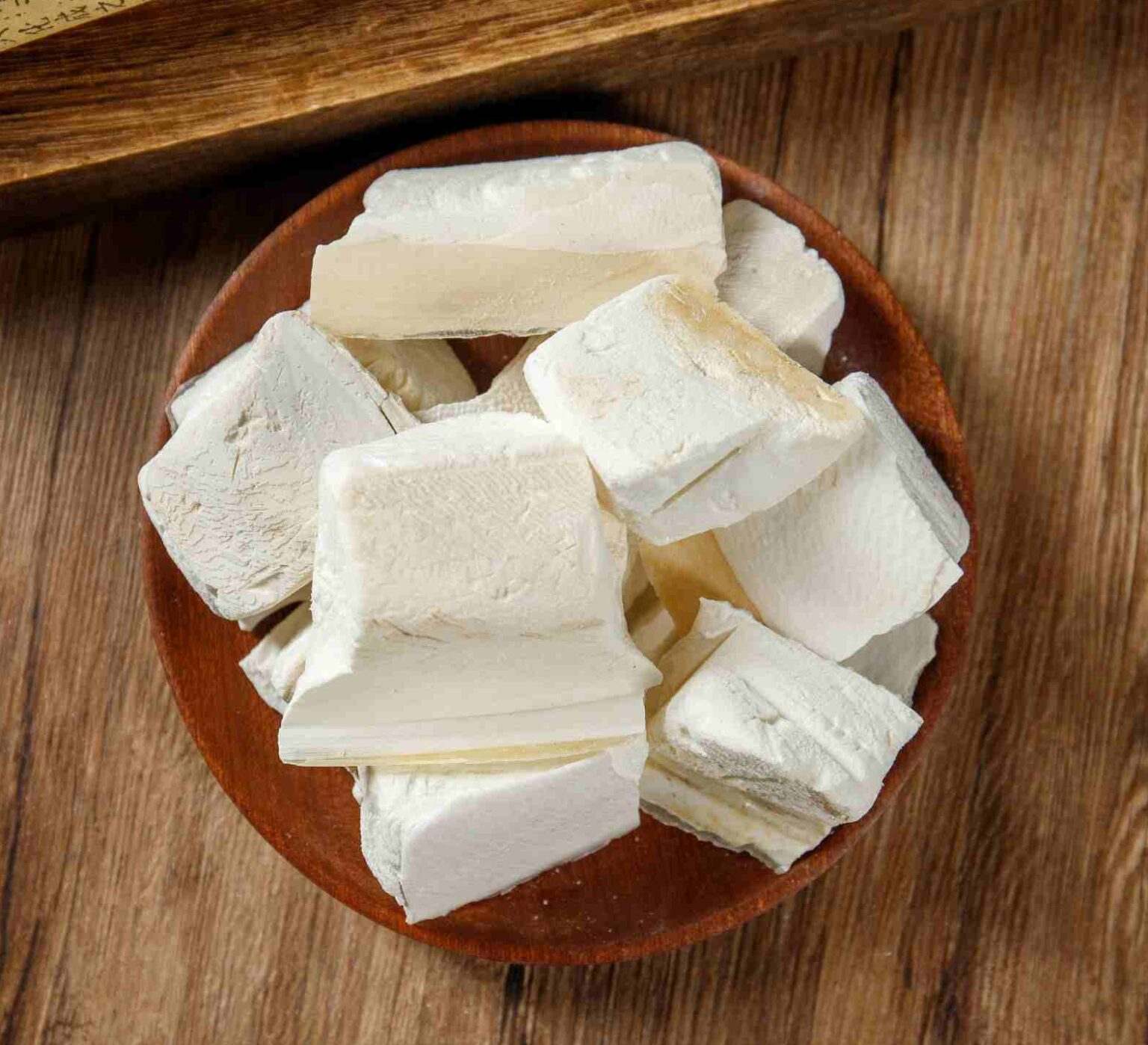
Cuttlefish bone is easy to miss when people process seafood. Once workers take it out of the animal, this light and chalky internal shell can move into a different supply path. In traditional Chinese medicine, the dried cuttlebone is called Hai Piao Xiao, or Sepiae Endoconcha. For buyers who purchase ingredients, the key questions start early. Which species comes in the shipment? How did the seller clean and dry it? What does the grade really mean? How much breakage can people accept after the goods travel by sea?
These details change a simple marine leftover into a clear TCM raw material. People then use it for further processing, distribution, or making finished products.
What Is Cuttlefish Bone, or Hai Piao Xiao?
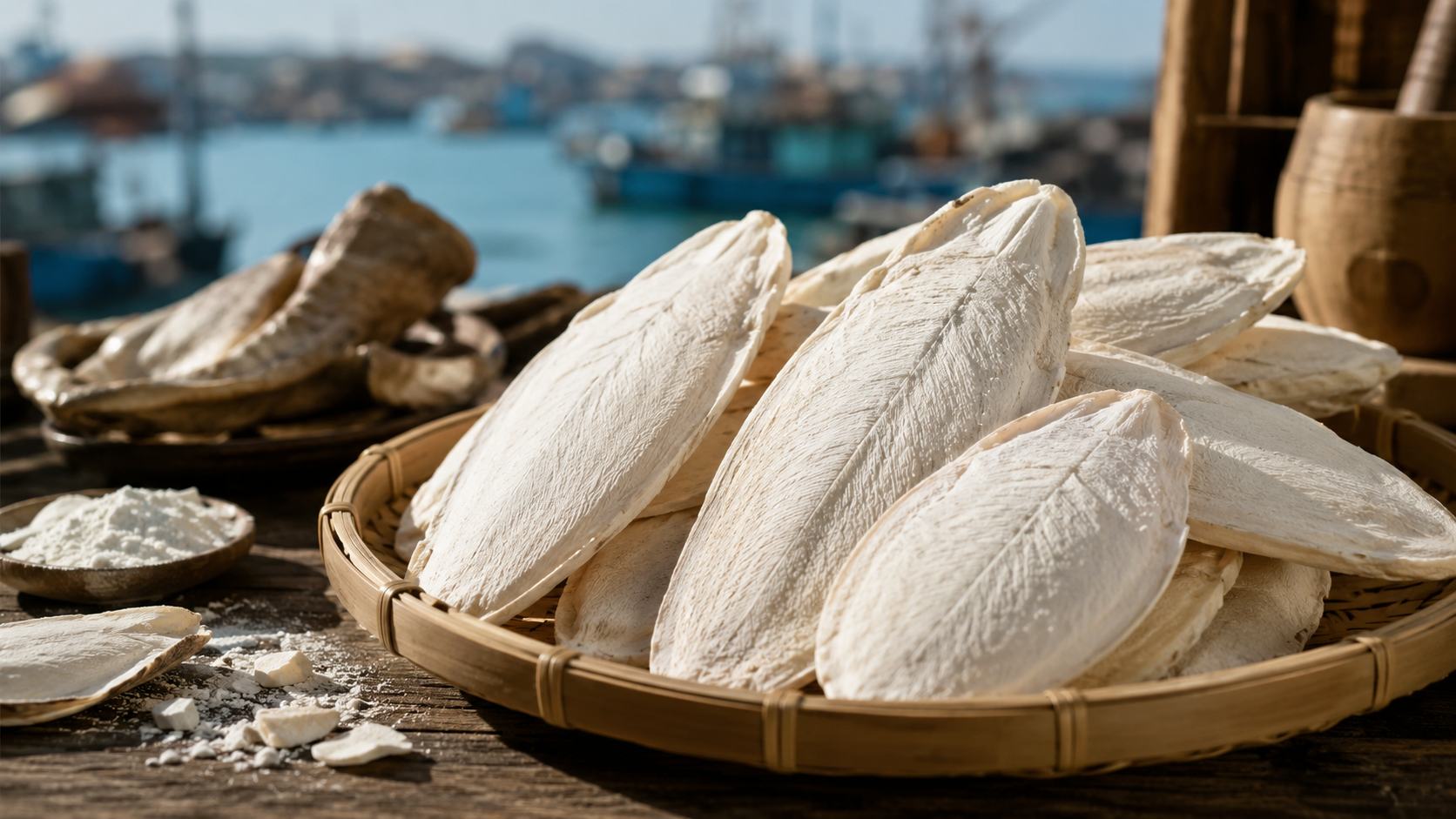
Cuttlebone is not a normal fish bone. It is the hard internal shell that helps a cuttlefish stay up or go down in the water. The shell has many layers and small holes. That is why it feels light and breaks easily when people handle it.
Identity and source species matter a lot in this trade. Hai Piao Xiao comes from the dried internal shells of two main kinds: Sepiella maindroni and Sepia esculenta. The usual material looks white or a little off-white. It is light, full of small holes, and snaps without much force. The two species are not the same size and their surfaces look different. Buyers therefore check more than just the color of a batch. Huirui’s cuttlefish bone raw material also comes from these two species.
Sepiae Endoconcha often shows up in official medicine books. Hai Piao Xiao and cuttlefish bone are the everyday names that traders use. A good purchase list should still name the exact species that the buyer will accept.
Where Does Cuttlefish Bone Raw Material Come From?
Most commercial cuttlefish goes into the food market first. Workers can collect the internal shell while they process the soft parts for eating. Instead of throwing the shell away, they can clean it, dry it, sort it, and sell it for other uses.
A simple path from seafood plant to raw material looks like this:
-
Workers process cuttlefish for food.
-
They take out the internal shells and separate them from soft tissue.
-
They throw away pieces that look dirty or damaged.
-
They wash the good shells and dry them fully.
-
They sort the dry material into whole bones, blocks, small pieces, or powder ready for grinding.
For a TCM buyer, the words “cuttlefish bone origin” should mean more than just a country name. The exact species, how batches stay separate, how people store the goods, and the lot records all affect how steady the quality stays. A cheap mixed lot may cost more later. It might hold dirt, strange colors, tiny broken bits, or pieces that fall outside the size the buyer asked for.
How Is Cuttlefish Bone Processed for TCM Use?
Processing takes away unwanted matter. It also makes the shell stable for storage and gives it a steady shape. The exact steps change with each customer’s needs, yet several stages stay common.
Initial Sorting and Cleaning
Shells that come from the food line may still hold salt, sand, leftover tissue, and surface dirt. Workers first sort out pieces that look dirty or weak. Then they wash the rest to clear off the impurities that stick to the surface.
The shell is full of tiny holes, so buyers often look for visible foreign matter, odd smells, dirty surfaces, and dark or grey spots. One photo alone is not enough to judge the whole lot.
Drying and Storage Control
After washing, the cuttlebone must become completely dry. Any leftover water can hurt storage life, create bad smells, make packing harder, and raise the chance of damage during long shipping.
Dry material stays in a clean and dry place before packing. Moisture control becomes even more important when cartons travel for weeks through damp ports, containers, and warehouses.
Breaking, Cutting, or Milling
Dried cuttlefish bone can leave the plant as whole bones, uneven blocks, smaller pieces, or powder.
The form should match the next step the buyer plans. Large blocks suit companies that want to control their own milling. Smaller pieces feed grinders more evenly. Powder needs a clear particle-size range because the single word “powder” tells almost nothing about how fine or even the material is.
How Is Cuttlefish Bone Graded?
A grade name means little unless both buyer and seller agree on clear numbers and limits. Trade labels such as AA can help a factory sort its own stock, yet a real purchase paper should explain exactly what that grade covers.
Size, how whole the pieces stay, and the amount of fine dust all matter. Cuttlebone is light and breaks easily. A load that looks clean at the start can arrive full of dust if the size rules and packing method stay vague. Grading therefore often focuses on usable piece size and the share of fines.
| Purchase form | Practical points to specify |
|---|---|
| Whole or large bone | length range, intactness, discoloration, breakage |
| Blocks or pieces | size band, uniformity, fines limit, foreign matter |
| Powder | mesh or particle-size range, purity, moisture, consistency |
A buyer who will mill the material may accept chips on the edges but will refuse a heavy layer of powder at the bottom of the carton. A distributor who sells whole pieces that customers can see may care more about the overall shape. The best grade always depends on the final use, not only on a label.
Color and physical look also count. Good dried cuttlefish bone is usually white to off-white, light in weight, full of holes, and fairly clean. Natural small differences are normal. Strong color changes, too much dirt, dampness, strong smell, or a high share of crushed material all need a closer look.
For repeat orders, approved samples and clear inspection photos can cut down arguments over loose words such as “clean,” “large,” or “premium.”
Quality Control for TCM-Grade Cuttlefish Bone
Physical grading is only one part of quality work. Buyers of TCM raw materials may also need identity checks and lab numbers that match the market where the goods will go.
The 2025 Chinese Pharmacopoeia entry for Hai Piao Xiao describes the dried internal shells of Sepiella maindroni or Sepia esculenta. Cleaning and drying form the core preparation steps. The book sets calcium carbonate at not less than 86.0 percent and gives limits for lead, cadmium, arsenic, mercury, and copper.
Calcium carbonate, or CaCO3, is a useful quality marker, yet it should never be the only buying rule. A practical certificate of analysis or batch list may also cover identity, appearance, foreign matter, moisture, heavy metals, and any extra tests the destination market demands.
Importers should confirm which pharmacopoeia or local raw-material rule applies before the goods leave the factory.
What Should Importers Ask a Cuttlefish Bone Supplier?
A short request for quotation can stop a long quality fight later. Before buying bulk cuttlefish bone, importers and manufacturers should ask these questions:
-
Which species and origin does the supplier provide?
-
Is the material whole, broken, cut, or milled?
-
What size range and fines limit apply?
-
How do workers clean, dry, inspect, and pack the shells?
-
Which test reports can the supplier share?
-
How does the company keep lot traceability?
-
What packaging lowers breakage during travel?
These questions make it easier to compare different quotations. Every cuttlefish bone supplier then answers the same clear technical target.
Bozhou Huirui as a Traditional Chinese Medicine Supplier
Bozhou Huirui Chinese Medicine Technology Co., Ltd. works in Bozhou, Anhui. Its range covers plant, animal, and mineral medicines as well as botanical raw materials. Cuttlefish Bone / Haipiaoxiao is offered as a China-origin dried internal shell from the recognized cuttlefish species.
The company serves wholesalers, importers, distributors, and brand owners. It keeps business links across China and in overseas markets in Southeast Asia, Africa, and the Middle East. Its service path covers quotation, ordering, production, inspection, packaging, transportation, and final receipt. ODM/OEM and private-label support are also available for customers who need extra processing or special supply arrangements.
When a buyer works with a supplier that already handles many TCM materials, the whole chain becomes smoother. Clear records, steady quality checks, and flexible packing options help the goods arrive ready for the next production step.
Conclusion
Cuttlefish bone turns into a reliable TCM raw material only when its identity, processing steps, physical grade, lab requirements, and packing rules are all clearly set. Buyers who source Hai Piao Xiao should treat species, cleanliness, dryness, size spread, fines, test data, and traceability as one single specification. A precise request for quotation makes it easier to compare suppliers and receive material that fits the next production step without surprise problems.
FAQs
Is cuttlebone the same as cuttlefish bone?
Yes. Both names point to the lightweight internal shell of cuttlefish. In TCM trade, the dried material is commonly called Hai Piao Xiao.
What is Sepiae Endoconcha?
Sepiae Endoconcha is the technical name referred to in pharmacopoeial literature for medicinal cuttlefish bone. The technical nomenclature will be used in technical documents while Hai Piao Xiao or cuttlebone is used by commercial buyers.
How is Hai Piao Xiao prepared?
The basic procedure is harvesting, rejecting the unfit material, cleaning, drying, grading, and milling if the small size is required.
How do buyers evaluate the quality of cuttlefish bone?
Usually, buyers examine the authenticity of the species, color, purity, dryness, sizes of pieces, fragmentation, fines, foreign substances, analysis results, lot tracing. In addition, the pharmacopoeial standards and extra specifications for the destination country are examined.
Is it possible to supply cuttlefish bone in bulk for production?
Yes. It is possible to supply bulk cuttlefish bone in the whole or as blocks, pieces or powder. Size, fines, testing, packaging and documentation must be specified in the request for quotation and not in the grade name.


