



Phellodendron Bark Extract for Skin and Hair Formulas
Phellodendron bark extract connects old plant traditions with today’s personal care products. It shows up in talks about skin care, products for oily skin, scalp care, shampoos, and cosmetic materials. Still, the name by itself does not give a formulator much useful detail. The type of species, the part of the plant, the solvent used, the carrier, the color, how it dissolves, limits on microbes, and the INCI name all shape how it works in a product. People should not mix up raw bark, bark powder, and a ready cosmetic extract. These are different materials.
What Is Phellodendron Bark Extract?
Phellodendron belongs to the Rutaceae family. In trade, the bark may be called Huang Bai, Cortex Phellodendri, Chinese cork tree bark, or Amur cork tree bark. These terms do not always identify the same species or form.
The Phellodendron Bark Extract results from solvent extraction and filtration processes, after which concentration follows. This extract may be either a solution or a powder form. The solutions contain water, glycerin, propanediol, or alcohol while powders contain maltodextrin. Every extract behaves differently when used in toners, serums, shampoos, and scalp sprays.
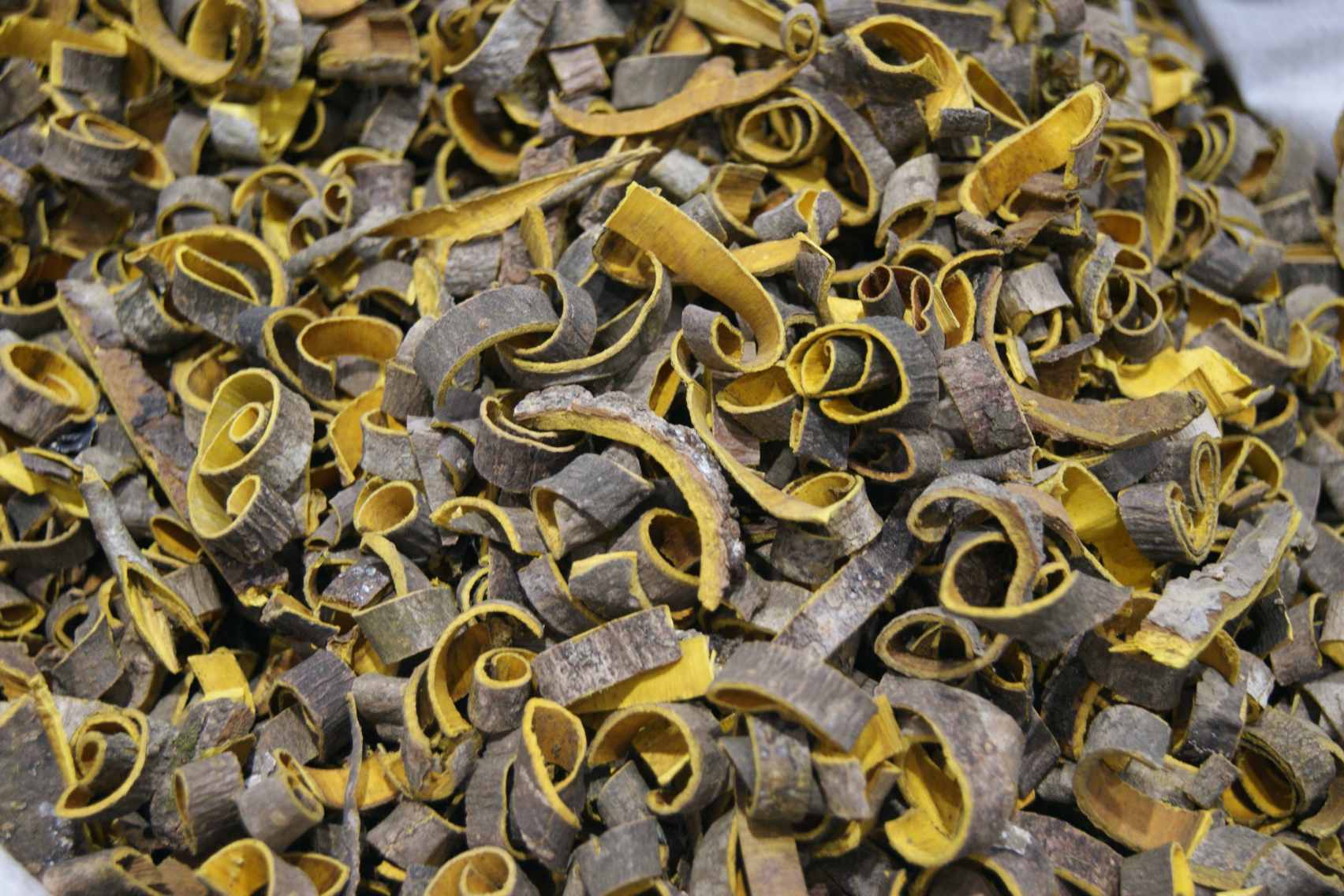
Raw Phellodendron chinense bark has a distinct appearance. Commercially available products are characterized by grayish brown outer surfaces having deep fissures vertically and yellow inner surface. Huirui offers Chinese origin Phellodendron chinense dried inner bark as a botanical raw material.
INCI Naming and Botanical Identity
The first question when sourcing should not be about benefits. It should ask which plant makes this ingredient. Labels, safety papers, and import records all need correct botanical identification.
Phellodendron amurense and Phellodendron chinense
Phellodendron amurense and Phellodendron chinense are close but different species. Both may link to Huang Bai in trade talks. This overlap creates confusion when buyers shift from traditional herbs to cosmetic ingredients.
Point to check
| Aspect | Phellodendron amurense | Phellodendron chinense |
|---|---|---|
| Common English reference | Amur cork tree | Chinese cork tree |
| Frequent search term | Phellodendron Amurense Bark Extract | Phellodendron chinense bark extract |
| Buyer action | Confirm INCI and extract composition | Confirm accepted ingredient name and documents |
| Raw-material check | Bark source and extraction details | Bark grade, origin, identity, and processing plan |
The INCI term PHELLODENDRON AMURENSE BARK EXTRACT means an extract from Phellodendron amurense bark. European cosmetic references list its functions as skin conditioning and tonic. This means it may help keep skin in good condition or give a nice feeling on skin or hair.
A supplier cannot substitute one botanical name for the other merely because the common names appear to be similar. The botanical name in every technical document should correspond to the actual material being supplied.
What Does Phellodendron Bark Extract Do for Skin?
In cosmetics, start with the listed function instead of a medical claim. Phellodendron Amurense Bark Extract serves as skin conditioning and tonic. It fits formulas for balanced skin feel, skin that looks oily, or daily exposure to the environment.
Skin-Conditioning Use
A skin-conditioning botanical is not a drug. Its role shows up in the whole formula. An oily-skin gel might combine it with humectants and light emollients. Then the team does stability tests, safety checks, and performance tests.
Studies have been conducted to test how Phellodendron amurense bark extract responds when human keratinocytes come into contact with particulate matter. However, laboratory studies of this nature may be a basis for further scientific study, but they cannot prove that the cream cures any medical conditions.
Suitable Skincare Formats
Possible formats include facial toners and light serums. They also cover gel creams and wash-off masks. Other options are facial cleansers and body washes. Body lotions with botanical themes work too.
Phellodendron materials often look yellow to brown-yellow. So they may add tint to a clear toner or a pale gel. Check the color at the planned dose and during heat and light tests.
For example, a clear facial toner may turn pale yellow once the extract goes in. That shift can fit a botanical product idea. But it becomes a problem if the brand wants completely clear water. A gel serum may slowly change color during storage. This happens more in transparent packaging.
Transitioning to hair care, the tonic function works for both skin and hair. This makes the extract useful in scalp products too.
Can It Be Used in Haircare and Scalp Products?
A tonic function can apply to skin or hair. So the extract fits scalp-focused products. The choice of format depends on its solvent and how it behaves with surfactants, salts, polymers, and preservatives.
Scalp and Shampoo Applications
Possible formats include scalp toner, leave-on serum, clarifying shampoo, daily shampoo, or rinse-off conditioner. It may support a fresh botanical idea. Still, do not present it as a hair-loss treatment or dandruff cure without solid evidence.
A scalp spray must work with its package. A shampoo needs to keep its thickness. A conditioner must stay stable near cationic materials. These practical details often matter more than general benefits.
In a clear shampoo, even a small amount of botanical extract may change clarity or reduce thickness. In a scalp spray, tiny particles can clog the pump. In a conditioner, salts and plant solids may break the emulsion. So test pilot batches under the same conditions planned for full production.
Formulation Questions That Matter
Two extracts with similar names can act differently. Before a lab trial, the formulator needs a clear technical view.
Is the Extract Water-Soluble?
The answer comes from the process and carrier. A water-based liquid spreads easily. An alcohol-containing extract can change fragrance solubility, preservation, or skin feel. A dry extract may dissolve fully, partly mix, or leave bits at the bottom. The data sheet should list the phase, temperature, pH range, and use level.
The full ingredient list matters too. A material sold as Huang Bai extract may hold the botanical extract plus glycerin, water, alcohol, propanediol, preservatives, or a drying carrier. Those extra items can affect label order, natural-content counts, product claims, and how the formula works.
What Can Affect Stability?
Key checks include pH, color, heat, light, and freeze-thaw stability. Look at interactions with surfactants or conditioning polymers. Also check odor, precipitation, preservation, and package fit.
No single use level works for every formula. Follow supplier guidance. Then do small-batch tests, stability work, preservative efficacy testing, and finished-product safety review.
A three-month accelerated test may show color darkening, sediment, odor change, or loss of thickness. These issues may not appear in the first week. Compatibility checks should happen in the final package. Some plant extracts can stain light plastic, settle near a dropper, or interfere with a spray.
How to Buy Cosmetic-Grade Phellodendron Bark Extract
For purchasing teams, the phrase “cosmetic grade” should start a document review. The material must suit the target market, formula, and process.
| Document or specification | Why it matters |
|---|---|
| Botanical name and plant part | Confirms identity and prevents species confusion |
| Extraction solvent and carrier | Predicts solubility, odor, color, and formula fit |
| Certificate of analysis | Shows batch results against agreed limits |
| Microbial and contaminant results | Supports raw-material risk assessment |
| INCI declaration and safety data sheet | Supports labeling and workplace handling |
| Shelf life and batch traceability | Guides inventory and links records to each shipment |
Buyers should ask about extract ratio, marker compounds, residual solvents, heavy metals, pesticide residues, appearance, storage, and samples. A Phellodendron bark extract COA should match the material and the destination market. One HPLC value does not replace full identity or contaminant control.
A good purchasing request should name the required botanical species, intended product, yearly volume, preferred extract form, target market, documentation needs, and packaging. For a shampoo project, the buyer may request details on water solubility, color, odor, recommended pH, and surfactant compatibility. For a serum project, clarity and low-temperature stability matter more.
Raw bark buyers need a different specification. They focus on origin, grade, moisture, foreign matter, bark thickness, inner color, bitterness, storage, packaging, and whether the material sells whole, cut, powdered, or ready for extraction.
Bozhou Huirui as a Phellodendron Bark Supplier
Bozhou Huirui Chinese Medicine Technology Co., Ltd. sits in Bozhou, Anhui. This is a big Chinese herbal trading center. The company supplies plant medicines and other traditional Chinese medicine materials to wholesalers, importers, distributors, manufacturers, and brand owners. It serves both domestic and overseas markets.
For Phellodendron projects, the company offers Chinese-origin Phellodendron chinense dried inner bark. It supports specifications, samples, packaging, inspection, and export logistics. Its ODM/OEM workflow covers quotation, production, inspection, packaging, transport, and receipt.
This setup helps buyers who want bulk Phellodendron bark, multi-herb orders, or a custom botanical project. Cosmetic inquiries should say if the need is raw bark for extraction or a finished extract with full technical and regulatory files.
Clear talk at this point cuts down on sourcing mistakes. A buyer who asks for “Phellodendron extract” without the species, solvent, application, or target country may get quotes for items that cannot compare. A detailed request makes sampling, testing, pricing, and production planning smoother.
Conclusion
Phellodendron bark extract can add a special botanical story to skincare and haircare. But success starts with exact identification. Check species, INCI name, solvent, carrier, solubility, safety records, and batch data before making formulas. Keeping raw bark separate from cosmetic extract avoids labeling errors, unstable products, and claims without support.
For commercial buyers, the best first step is a clear specification instead of a general name. Strong raw-material identity, technical papers, sample tests, and batch control build a better base for product development and steady supply.
FAQs
Is Phellodendron Bark Extract Good for Oily Skin?
Yes, it is appropriate in skin conditioning preparations for oily-looking or problematic skin. Its effectiveness will depend on the formulation, claim, use level, and efficacy of the final product. Do not make any claims about its benefits for acne without proper substantiation and FDA approval.
Can Phellodendron Bark Extract Be Used in Shampoo?
The right extract can be tested in shampoo and hair products. The formulator must ensure water solubility, interaction with surfactants, color, smell, viscosity, preservation, and use level proposed by the supplier.
What Should Be Included in a Phellodendron Bark Extract COA?
Tests that may be conducted in the COA are: appearance, identity, assay/marker (if applicable), moisture/solids content, and microbial. Heavy metals, pesticides, and residual solvents may or may not be included in the COA or in individual reports.


